1. Why the Drain Matters More Than You Think
A shower pan slopes slightly toward its drain. The right drain sits at the low point, lets water disappear fast, and is easy to clean. Because custom pans do not come with a “default” drain cut-out, you get to decide what shape, size, and style will suit your bathroom’s big picture.
- A line of metal slots can say “sleek spa.”
- A tiny hidden tile square can whisper “clean and quiet.”
- A square grate with a bold pattern can shout “look at me!”
Choosing early helps your tile setter plan slopes, cuts, and waterproofing details.
2. Meet the Linear Drain
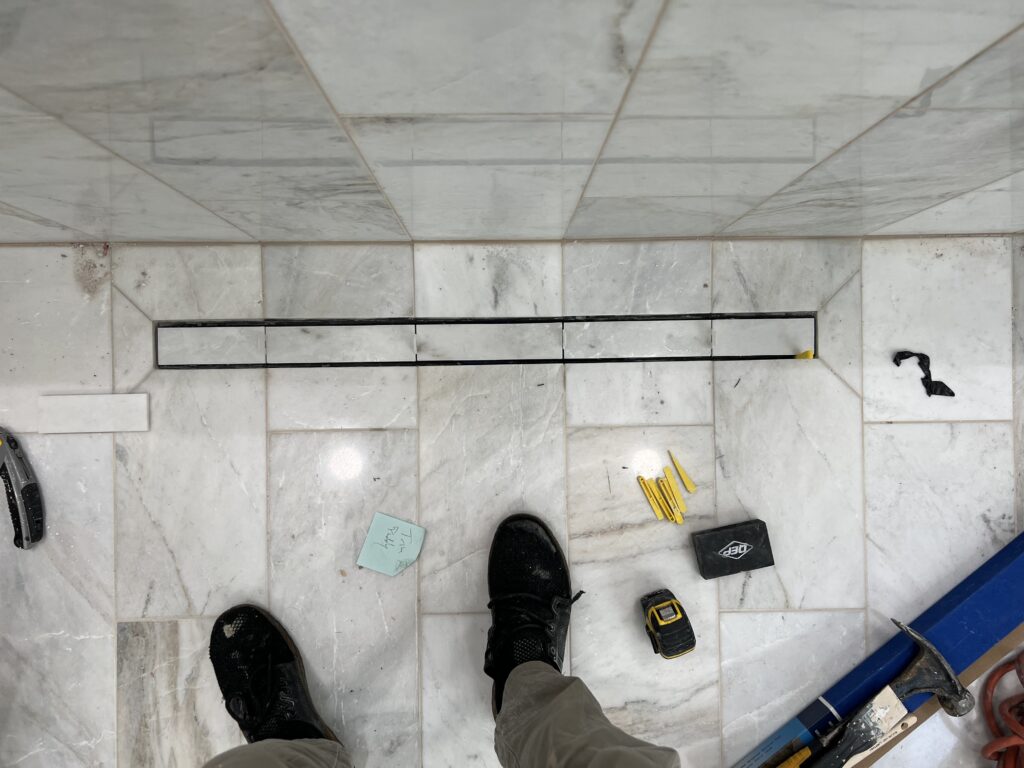
A linear drain is a long, narrow trough—usually two to four feet wide—set near one wall or at the doorway of the shower. Think of it as a mini gutter built into the floor.
2.1 How It Works
The floor slopes in one direction toward the line. That single-direction slope means large tiles can lie flat with only straight cuts, which many people find easier to clean and nicer to the eye.
2.2 Two Looks
- Grate Style
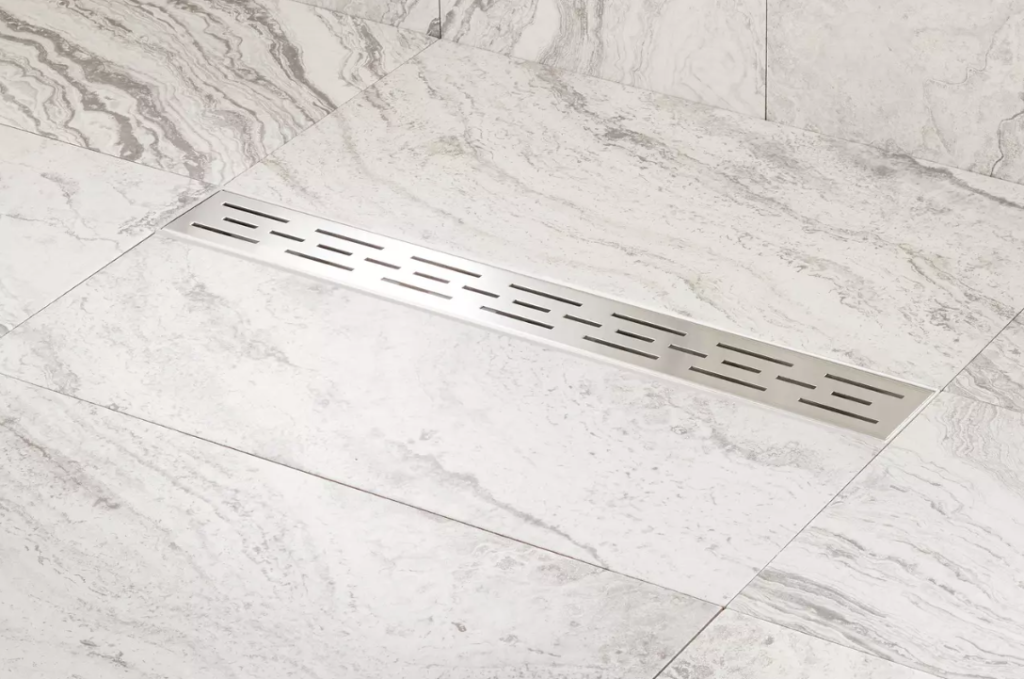
The top is a stainless or powder-coated bar with slim, even slots. The simple lines pair well with modern showers that use glass walls, black fixtures, or crisp subway tile. - Tiled-In Style
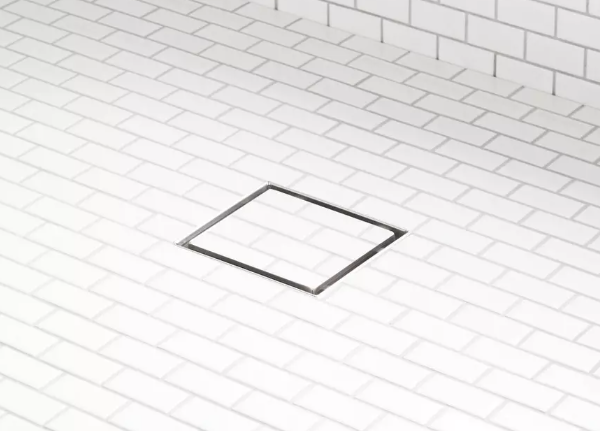
Removable tray on top holds a strip of the same floor tile. Once set, the drain almost vanishes. From above you see only the lines where water disappears. This style is perfect when you want the floor to look like one calm sheet.
2.3 Why Choose It?
- Curbless entry: Because the line can sit at the doorway, the main floor flows right into the shower. Wheelchairs, walkers, and kids love the smooth roll-in surface.
- Large tile freedom: Big tiles mean fewer grout joints and a cleaner look.
2.4 Points to Plan For
- Cost: Linear drains cost more than square drains—both the part and the labor.
- Framing depth: The trough sits lower than the tile, so sometimes the floor joists need slight trimming or extra blocking.
- Cleaning: You must lift the grate now and then to rinse hair and soap from the channel.
3. Meet the Square Drain
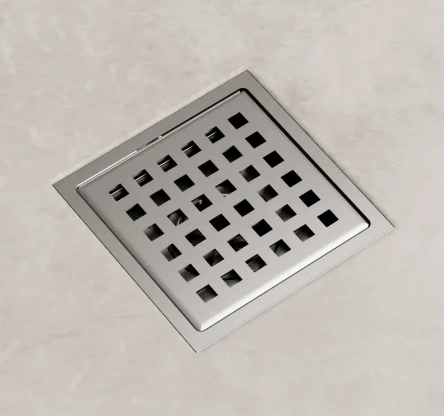
The square drain is the classic choice. It sits near the center of the pan or sometimes off to one side. The floor slopes down from all four directions like a shallow pyramid.
3.1 Grate vs. Tiled-In
- Grate Style
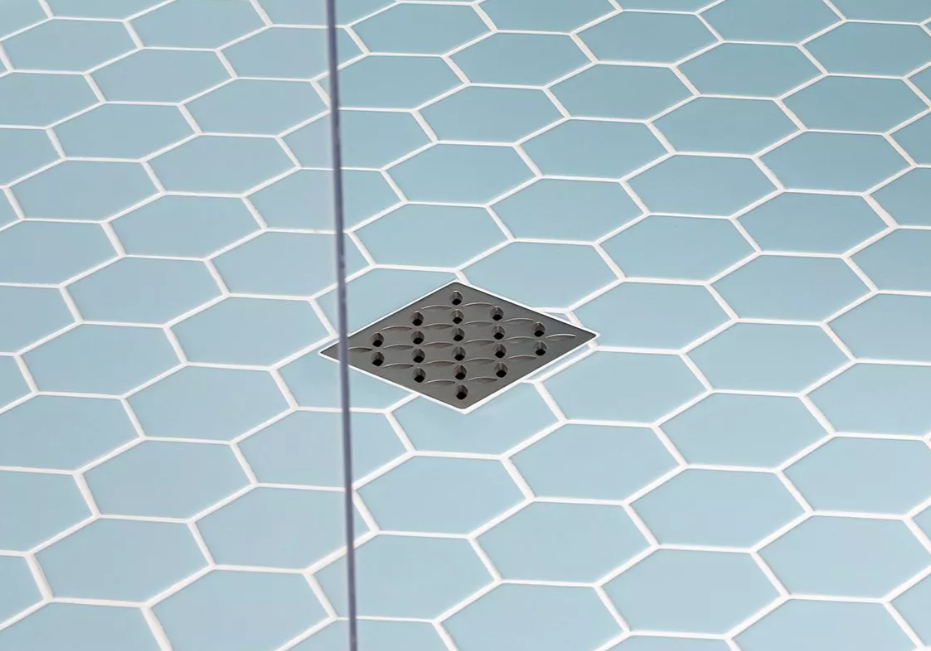
You can pick from plain grids, diamond shapes, wave patterns, or even themed cutouts. Finishes range from bright chrome to matte black. A grate can echo the faucet color or add a small splash of shine in a dark floor. - Tiled-In Style
Here, a small frame holds a “cap” that is tiled to match the floor. Only a hairline gap outlines the drain. It takes skill to cut the tile plug just right, but once done, the drain fades into the field, letting other details—like a mosaic niche—take center stage.
3.2 Why Choose It?
- Budget-friendly: Square drains start at a modest price and fit most standard plumbing kits.
- Classic layout: Works with both mosaics and smaller floor tiles that bend easily to four-way slopes.
- Quick install: Many pans and pre-sloped systems come ready for a square center drain, saving build time.
3.3 Points to Plan For
- Tile cuts: Larger tiles must be cut into pie-shaped pieces to follow the slope. Some people love the pinwheel look; others find it busy.
- Curb height: Because the floor slopes down from all sides, you need enough drop to keep water in. This can raise the shower curb unless you recess the pan.
- Foot feel: Your feet stand on a slight hump at the high spots, which can feel different from a single-slope floor.
4. Style Guide: Let the Drain Match Your Theme
| Bathroom Style | Drain Shape | Cover Type | Why It Fits |
| Modern Spa | Linear | Grate, matte black or brushed steel | Long lines pair with frameless glass and large tiles |
| Hidden Luxury | Linear | Tiled-in | Floor looks unbroken; guests wonder where the water goes |
| Classic Cottage | Square | Grate with soft bronze | Small touch of vintage metal matches knob sets |
| Minimalist Loft | Square | Tiled-in | Keeps the floor field plain and calm |
| Eclectic Fun | Square | Grate with custom pattern | Drain becomes a tiny art piece in a playful room |
5. Practical Questions to Ask Before You Buy
- Who will clean it?
If bending down to lift a linear tray feels hard, a simpler grate might be better. - How big are my floor tiles?
Very large pieces stay happier with a single-direction slope and thus a linear drain. - Do I want a curbless shower?
Linear drains by the doorway make zero-curb easier. Center square drains can work too but need more slope math. - What is my budget?
List not only the drain price but also extra framing, waterproofing, and tile labor. - Will finishes match?
If you love black hardware, choose a black grate or hide the drain under tile.
6. Step-by-Step: From Dream to Install
- Plan with a pro: Tell the designer or plumber early which drain you want. Moving drain pipes later is costly.
- Pick the waterproof system: Some brands make trays that lock to their drains—linear or square. Stick with one family of parts.
- Set slope first: The pan must tilt the right amount (about ¼ inch per foot) so water races to the drain.
- Dry-fit tiles: Lay tiles without glue to see cuts. Adjust pattern so small pieces do not land on corners.
- Install and test: After waterproofing, fill the pan and do a 24-hour flood test. If no drops appear below, you are safe to tile.
- Final seal and polish: Once grout cures, add silicone at change-of-plane joints. Wipe the grate or tile cap clean, and your new drain is ready for service.
7. Maintenance Made Simple
- Lift the grate or tile cap once a month to clear hair.
- Pour a cup of hot water mixed with mild dish soap to wash oils away.
- Avoid harsh chemicals—bleach can dull finishes and weaken grout.
- Check that screws (if any) stay snug so the cover does not rattle.
A two-minute routine beats a clogged line and keeps water flowing like day one.
8. Real-World Examples
- Urban Condo: The owners wanted a seamless, hotel-like space. They chose a tiled-in linear drain at the entrance. Large marble-look planks ran straight from the vanity to the back wall, making the small room feel twice as long.
- Family Farmhouse: The goal was charm and easy upkeep. A bronze square grate with a leafy cutout sat in the center of a penny-round mosaic floor. Kids loved watching water spin into the pattern; parents loved the quick clean-up.
- Accessible Suite: Mobility was key. A three-foot stainless linear drain let the wheelchair roll in with no bump. A grate cover matched the grab bars, tying safety and style together.
9. Final Thoughts
A custom shower pan is like a tailored suit: the details set it apart. The drain you pick might be a thin line that whispers or a bold square that boasts, but it must always work. By thinking about slope, tile size, cleaning habits, and overall look, you can choose a drain that fits both form and function. Talk with your builder, look at samples, and trust your eye—and your feet. Whether you step onto classic pinwheel cuts or glide across a wide, single-slope slab, the right drain makes every shower smoother, drier, and more enjoyable.
Ready to design your dream shower floor? Start at the drain, and the rest will fall right into place.